
We’ve all heard of ticks and the risks they pose to our precious pups and also us humans, but you might not have ever come across one before. In the unfortunate event that you do, it’s crucial you know how to deal with these horrid critters. Knowing how to remove a tick from your dog safely is a crucial skill that can help protect your dog against various diseases and illnesses.
In this guide, our VetUK experts will teach you how to spot a tick on a dog, the best way to remove these parasites and how to care for your dog following removal.
At VetUK, we offer a range of dog tick removal products to safely and effectively eliminate these pests.
How can I tell if my dog has a tick?
tick is a small, parasitic arachnid that feeds on the blood of animals, including dogs, birds and humans. Ticks can vary in size, but they are usually around 1mm to 1cm in size with 8 legs. They are round in shape, and their size increases greatly to around the size of a pea when full of blood.
In order to tell if your dog has a tick, you need to manually inspect your dog, as they can be concealed by fur. Run your hands through your dog’s fur and feel for any bumps or raised areas. You can then part the fur for further inspection to check if the lump is, in fact, a tick.
Some hidden spots to pay attention to include:
- Around the eyes and ears
- Underneath your dog’s collar
- Between toes or near paw pads
- On the underside near the groin or armpits
- Along the base of the tail
Why are ticks dangerous to dogs?
Ticks can cause a lot more than just irritation for your dog. Ticks carry dangerous bacteria and parasites that can cause serious and life-threatening illnesses. When they latch onto a host, they can release and transmit bacteria directly into the bloodstream, which can cause a number of illnesses, including:
Lyme Disease: This disease affects both pets and humans and can cause swollen joints, lameness, loss of appetite, and lethargy. If left untreated, Lyme Disease can lead to serious issues involving the heart, kidneys and neurological complications. Early Lyme Disease is usually treated with a course of antibiotics.
Ehrlichiosis: This causes fever symptoms, weight loss and can weaken your dog’s immune system with chronic infections. Again, if left untreated, this disease can cause further long-term issues.
Anaplasmosis: Causes joint pain, fever, vomiting, diarrhoea, and in extreme cases, seizures and organ failure.
Rocky Mountain Spotted Fever: The most common symptoms are a rash on the skin and fever-like symptoms. This disease is actually more fatal than Lyme Disease and can cause severe complications like organ failure.
Babesiosis: This is a tick-borne parasite that destroys red blood cells. It causes anaemia, a swollen abdomen, weakness and can lead to jaundice.
The longer a tick stays attached to your dog, the higher the risk of diseases being transmitted. This is why it’s crucial to detect and remove ticks early, before the 24-48 hour mark.
How to remove a tick from a dog safely
The safest way to remove a tick is with a designated tick removal tool or a pair of fine-tipped tweezers. NEVER try to remove a tick with your fingers, as this can not only cause the tick’s head to be left behind in the skin, but it can also transfer bacteria to your fingers.
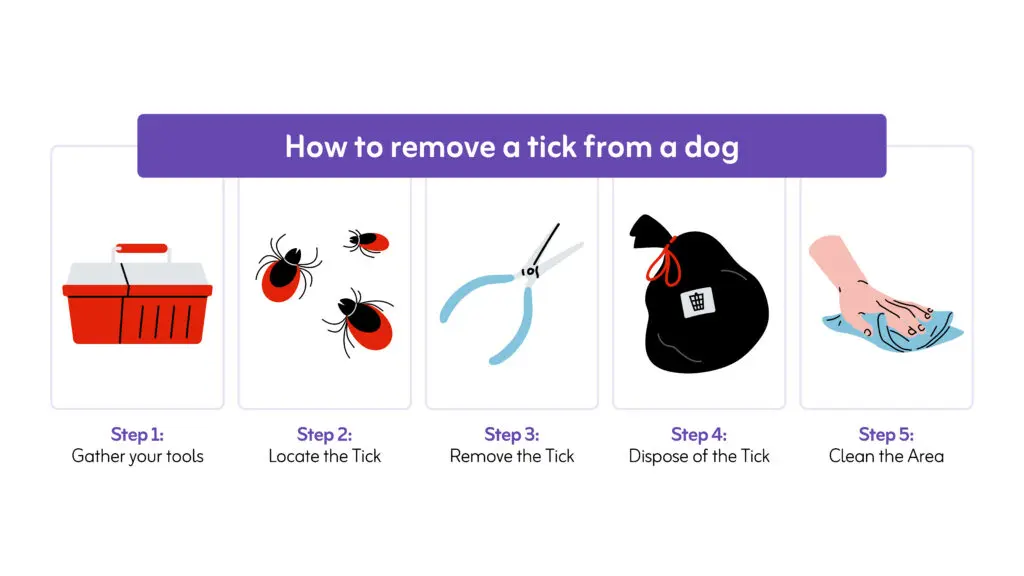
Here’s how to remove a tick the correct way:
Step 1: Gather your tools
Locate your tweezers or tick hook and a small container to place the tick in once removed. You’ll also need some disposable gloves, antiseptic solution and cotton wool.
Step 2: Locate the Tick
Part your dog’s fur and locate the tick. If the tick is embedded, you will see its body protruding from the skin.
Step 3: Remove the Tick
If you have a tick removal tool, slide the tool under the tick and hook it upwards, gently lifting. If you’re using tweezers, grab the tick as close to the skin as possible and pull slowly upwards. Don’t use a twisting motion or pull too fast, as this can cause the head to separate and remain embedded in your dog’s skin.
Step 4: Dispose of the Tick
Once removed, place the tick in the container, add some antiseptic/rubbing alcohol and seal with a lid. If you’re concerned for your dog’s welfare, you can keep the tick stored in this container in case they develop any symptoms. In this case, you can take this container to the vet for testing.
Step 5: Clean the Area
Disinfect your dog’s skin with a cotton wool ball soaked with antiseptic. Remove your gloves and dispose of them, and ensure you thoroughly clean your hands.
What to do after removing a tick from your dog
Once you’ve removed a tick, the care doesn’t stop there. You need to keep a close eye on your dog for any symptoms of illness.
Monitor your dog for:
- Lethargy
- Loss of appetite
- Limping
- Fever symptoms
- Vomiting or upset stomach
- Pale gums
- Swelling, pus or irritation around the bite
Any of these symptoms requires a trip to the vet to ensure its nothing more serious or a complication from the tick bite.
How do I prevent my dog from getting ticks?
There are a few ways to help prevent your dogs from picking up ticks or getting ill from tick bites. The easiest way to keep your pup safe is to reduce the chance of encountering ticks to begin with.
Outdoor precautions
If you have a garden where your dog loves to play, keep the grass well-trimmed and remove any tall weeds or shrubs where ticks can hide. You can also use sprays in the garden that repel ticks.
When on walks, stick to clear paths and perform regular tick checks on your dog after being outdoors in rural areas.
Preventative treatments
There are a number of dog accessories and treatments that can prevent or eliminate ticks. You can purchase dog flea and tick collars, which have active ingredients to deter ticks; these usually last for around 8 months before they need replacing.
You can also purchase topical treatments like our range of VetUK Flea and Tick Treatments that aim to prevent and kill any existing parasites. These are usually applied once a month to the skin around your dog’s neck and offer protection until the next application.
Grooming and maintenance
Keeping your dog’s fur short, clean and well-maintained will help to make it easier to detect and remove ticks. Investing in dog grooming products like fine tooth combs makes inspecting your dog easy, whilst heavy-duty brushes will prevent matting in longer-haired dogs.
You should also keep on top of cleaning your dog’s bedding and towels, especially after resting from long walks. All of these measures combined are the best way to keep your dog protected against ticks and fleas.
Final tips for keeping your dog tick-free
We know that ticks are an unavoidable part of outdoor life, but staying educated and prepared should your dog ever come into contact with a tick is the best way to minimise any risk of illness.
Stay aware of different diseases and always use the proper removal tactics from this blog. Should your dog be bitten by a tick, it’s always best to consult your vet if you’re worried or notice any developing signs of illness.
If you’re worried about how to protect your pup or you’re looking for advice on the right tick prevention products, our VetUK experts are here to help. Get in touch with our team, and we’ll happily help you find the right treatment!
Leave a Reply